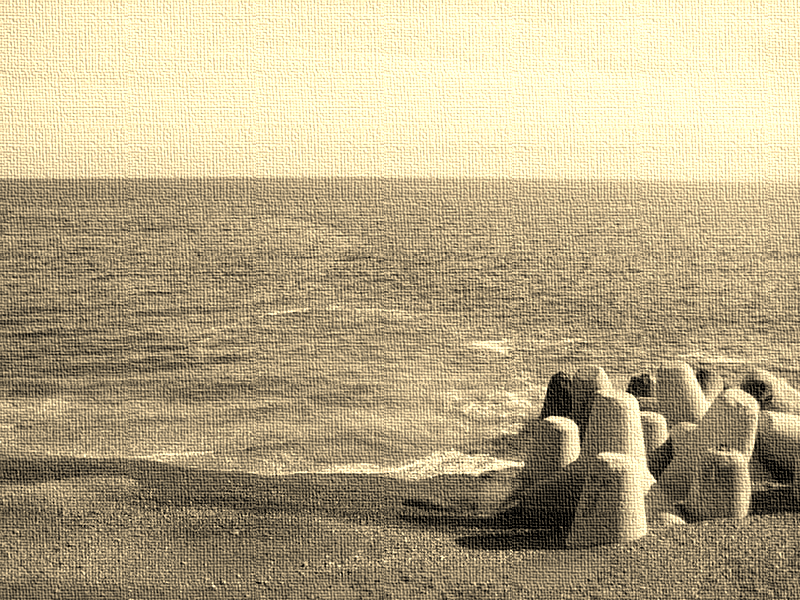
If something truly simple exists, simplicity does not contain complexity; it merely attracts it. Conversely, complexity does not contain simplicity; it merely destroys it. Complexity is the entanglement of various relationships and the act of being arranged as such. On the other hand, true simplicity can be described as something that cannot be arranged—that is, something incomparable.
Assuming true simplicity exists, from the perspective of complexity, it appears as a “void” where things can be arranged. Yet, the moment simplicity is arranged, that simplicity is lost. Does this mean that when we humans, who possess complexity, are drawn to it, we can do nothing but destroy it? It seems impossible to touch true simplicity while keeping it simple. If so, a sense of guilt seems inevitable when one aspires toward the truly simple.
Nevertheless, I believe there are moments when true simplicity reveals itself. While complexity destroys simplicity, is that not distinct from destroying the simple thing itself? In the midst of entangled relationships, simplicity may be glimpsed when a “misalignment” (gap) occurs between those very relationships. This misalignment is the difference between each relationship, and perhaps this difference itself manifests the essence of simplicity.
If one wishes to touch simplicity, rather than merely arranging things or destroying the object itself, it seems better to gaze intently at the differences between relationships created by that arrangement. However, to put it this way might imply that the difference between relationships is merely another relationship in itself. Yet, the fact that there is a “void” in simplicity that allows for a relationship to exist—perhaps that is not synonymous with simply indicating another relationship.